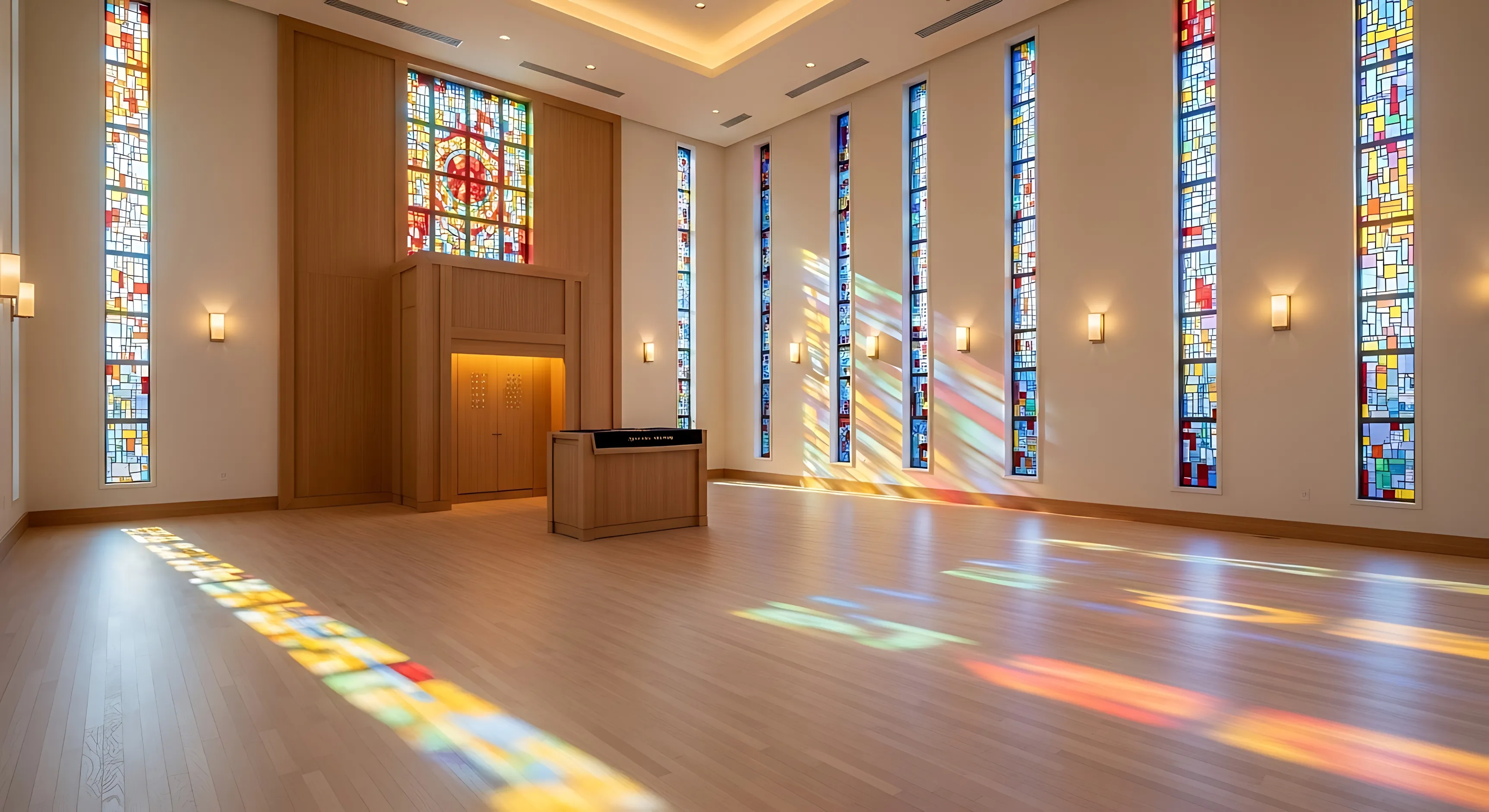
How Flooring Impacts Acoustics In Churches And Worship Spaces
Sound is a funny thing in large open spaces. It bounces, lingers, and layers in ways that can make a sermon feel either crystal clear or completely incomprehensible. Truth is, acoustic flooring for churches and worship spaces is one of the most underestimated levers a facility committee has. Before you finalize any flooring specification, here’s what you actually need to know.
Why Does Flooring Have Such a Big Effect on Church Acoustics?
Sound waves don’t care what your design aesthetic is. They travel outward from a source, and when they hit a surface, they either reflect back into the room or get absorbed. Hard surfaces like concrete, stone, tile, and unfinished hardwood reflect sound efficiently, which creates reverberation and echo. Soft surfaces like carpet absorb sound energy, reducing that bounce-back effect.
Most sanctuary flooring options are already working against acoustic clarity before you even factor in the floor. High ceilings, large open volumes, hard plaster or drywall surfaces, wood pews: all of it reflects sound. The floor is one of the few places a renovation committee can actually change that equation.
One spec term worth knowing here: IIC rating commercial flooring. IIC stands for Impact Insulation Class, and it measures how well a flooring assembly reduces impact noise from footsteps, chair movement, or dropped items. Higher IIC = less impact sound transmitted. It’s especially relevant for multi-story facilities or spaces where noise travels between a sanctuary above and classrooms below.
Which Flooring Materials Are Best for Managing Sound in a Sanctuary?
There’s no one-size-fits-all solution when it comes to church flooring acoustics, and any dealer who tells you otherwise hasn’t spent much time in actual worship facilities. Here’s how the main commercial flooring materials stack up acoustically.
Carpet Tile and Broadloom
Commercial carpet tile church applications are the gold standard for sound absorption. Solution-dyed nylon with cushion backing delivers meaningful absorption across speech frequencies, making it ideal for sanctuaries where clarity of the spoken word is the primary goal. Broadloom works similarly, though carpet tile offers easier replacement in high-traffic zones.
Does Carpet Always Make a Sanctuary Sound Better?
Not automatically, no. Carpet absorbs high-frequency sound very effectively; sometimes too effectively in spaces designed for live worship music. Heavy carpet throughout a sanctuary can produce a flat, muffled acoustic environment that pulls the life out of live instrumentation and choral music. Pile height, carpet density, and backing type all affect the amount of absorption, which makes sound absorption flooring a specification decision, not just a product selection. It’s the kind of call worth making with an experienced commercial flooring dealer who understands the difference.
Museums face a nearly identical trade-off in their gallery spaces — carpet tiles reduce footfall noise effectively, but the wrong specification can conflict with the acoustic environment the exhibits require. Our breakdown of the best flooring options for museums covers how those acoustic decisions play out across gallery, corridor, and back-of-house zones.
LVT and Luxury Vinyl
Luxury vinyl tile reflects more sound than carpet but significantly less than stone or hardwood. For multi-use sanctuaries that regularly host community events, concerts, or gatherings where hard-surface cleanability matters, LVT can be a smart base. Pair it with area rugs in seating zones for targeted sound absorption flooring where it counts most.
Rubber Flooring
Rubber delivers strong impact sound reduction with naturally high IIC ratings, making it the right call for fellowship halls, corridors, and back-of-house areas where foot traffic is heavy and ambient noise is the problem to solve.
Hardwood and Engineered Wood
Hardwood is acoustically challenging in large open sanctuaries. It’s highly reflective, which is beautiful, but the acoustic equivalent of adding another hard wall to the room. In smaller chapels with substantial soft material elsewhere (cushioned pews, upholstered seating, thick drapery), engineered wood can work. In a large open worship hall, it’s a risk.
How Do You Handle Acoustics Across Different Spaces in a Worship Facility?
The sanctuary gets most of the attention, but decisions about church flooring materials ripple across the entire facility. Different zones have genuinely different acoustic needs, and treating them the same way is how you end up with a fellowship hall that sounds like a cafeteria.
Sanctuary and Main Worship Hall
The goal in the sanctuary is balance: enough absorption for speech clarity, enough reflectivity for musical fullness. Carpet vs hard floor church is rarely an either/or decision in well-specified worship spaces. A common approach for a church is to use commercial carpet tile in the main seating field, paired with LVT or hardwood near the altar, stage, or platform, where performers need better projection and a surface that won’t muffle the low-end resonance of instruments.
Fellowship Hall and Multipurpose Rooms
Fellowship halls are notoriously loud, thanks to hard surfaces, open layouts, and lots of bodies. Acoustic-backed commercial carpet tile or rubber flooring can dramatically reduce ambient noise levels and make those gatherings more comfortable without requiring a full acoustic renovation of the ceiling or walls. This is also a space where flooring reverberation problems are most often felt first.
Corridors and Entryways
Walk-off matting and entrance grids do double duty: they control both noise from heavy foot traffic during service entry and exit, and moisture from weather. Commercial-grade entrance mats are often overlooked in facility planning but carry real acoustic and maintenance value.
Nurseries and Classrooms
Speech intelligibility for children’s programming depends partly on the acoustic environment. Hard flooring in a nursery or classroom compounds background noise in ways that affect how clearly kids can follow instructions. Acoustic-friendly flooring in these zones is one of the most consistently overlooked line items in a worship facility renovation.
Replacement timing is another aspect of flooring planning that often gets overlooked in institutional settings. Knowing when different materials reach end-of-life — and what warning signs to watch for — helps facilities budget proactively rather than reactively. Our guide on how often hospital flooring needs to be replaced offers a useful framework for thinking through material lifespans in high-traffic, high-demand environments.
How Does Consolidated Flooring Help Worship Facilities Get the Acoustic Balance Right?
Consolidated Flooring is a commercial flooring dealer with 80+ years of experience and Starnet membership; the kind of partner that has worked across facility types and understands that worship space flooring decisions are acoustic decisions first, aesthetic decisions second. Our team works with facility committees to evaluate material options, understand the real-world trade-offs between sound absorption flooring and reflective surfaces, and select products designed to meet both the performance and budget requirements of specific spaces, all before a single square foot is ordered.
Ready to think through the flooring specification for your facility? Contact us at consolidatedflooring.com to start the conversation.