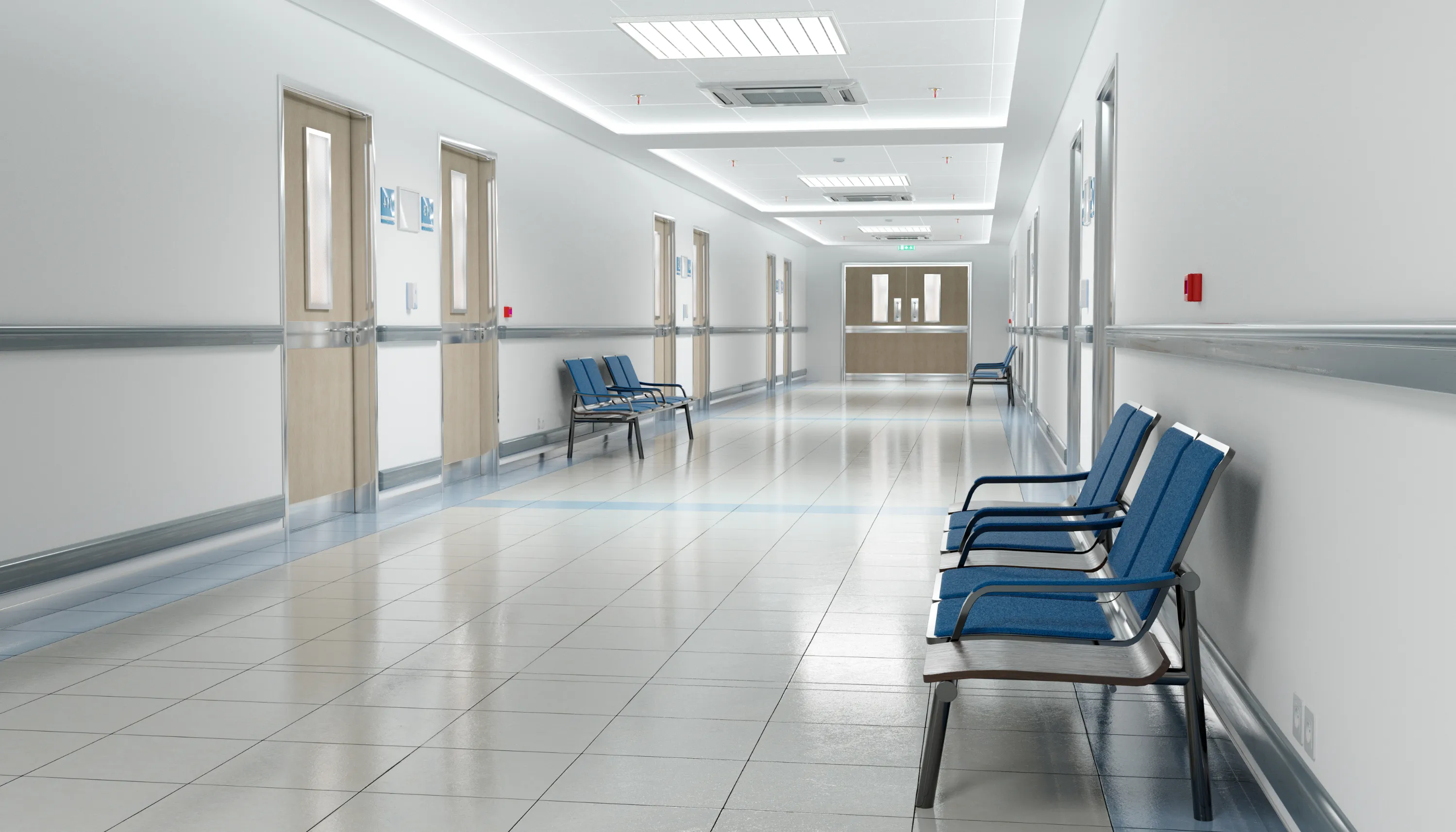
How Often Does Flooring Need To Be Replaced In A Hospital Or Other Healthcare Facility?
Quick answer: Hospital flooring typically needs to be replaced every 7 to 20 years, depending on the material and the zone it is installed in. Sheet vinyl in clinical areas lasts 10-15 years, luxury vinyl tile (LVT) lasts 10-20 years, vinyl composite tile (VCT) lasts 7-10 years, and rubber or terrazzo can last 20-40+ years. Replace flooring sooner if seams separate, the wear layer degrades, or the surface can no longer be properly disinfected.
There are so many things happening at once in any healthcare facility that it’s easy to overlook the importance of the flooring. Commercial flooring in Chicago hospitals has to hold up to heavy foot traffic, commercial cleaners, and heavy equipment. With all that wear, even high-quality flooring materials don’t last forever.
In this guide, healthcare professionals will find an overview of how often to replace hospital flooring. We’ll cover which materials last longest, and the signs it’s time to schedule flooring replacement in a healthcare facility.
How Long Does Hospital Flooring Typically Last?
All flooring materials are different, so there’s no one answer to this question. In general, the range is roughly 7–20 years depending on the material and zone. However, exactly when hospital flooring replacement is necessary varies by material.
Hospital Flooring Lifespan by Material
| Material | Typical Lifespan | Best-Fit Zones | Maintenance Notes |
|---|---|---|---|
| Sheet vinyl (homogeneous / heterogeneous) | 10-15 years | ORs, ICUs, procedural rooms | Seamless, heat-welded surface; chemical exposure shortens life |
| Luxury vinyl tile (LVT) | 10-20 years | Corridors, patient rooms, waiting rooms | High durability, minimal maintenance |
| Vinyl composite tile (VCT) | 7-10 years | Budget and back-of-house areas | Disruptive strip-and-wax cycles 1-4x per year |
| Carpet tile | 5-8 years | Waiting rooms, administrative areas | Not appropriate for patient rooms or clinical zones |
| Rubber / terrazzo | 20-40+ years | High-traffic, long-term installations | Higher upfront cost, lowest ongoing maintenance |
Does the Type of Flooring Material Change the Replacement Timeline?
Yes, different materials last longer than others, especially in different parts of a hospital. These are some of the most common materials:
- Sheet vinyl (homogeneous/heterogeneous): Lasts 10–15 years in clinical areas. Seamless, monolithic surface construction makes it the standard in ORs, ICUs, and procedural rooms, but chemical exposure can shorten its longevity.
- Luxury vinyl tile (LVT) lifespan: Healthcare facilities can get 10–20 years out of LVT in high-traffic areas like corridors, patient rooms, and waiting rooms. It also has minimal maintenance requirements.
- Vinyl composite tile (VCT): Lasts 7–10 years before restorative VCT replacement becomes necessary. Keep in mind that strip-and-wax cycles, generally required 1-4 times a year, are highly disruptive in active healthcare settings.
- Carpet tiles: Last 5–8 years in waiting rooms and administrative areas; not appropriate for patient rooms or clinical zones.
- Rubber/terrazzo: Lasts 20–40+ years, with lower ongoing maintenance requirements, but a higher upfront investment.
What Flooring Works Best in High-Traffic Hospital Corridors and Operating Rooms?
Corridors and operating rooms have different requirements for flooring. The floors of corridors need to be able to withstand heavy foot traffic and rolling loads, while operating rooms need to have seamless surfaces for easy cleaning. In fact, the CDC requires operating rooms to be cleaned at three distinct intervals each day, so operating room flooring must tolerate repeated disinfection without degrading (CDC environmental cleaning procedures).
Durable, scratch-resistant and impact-resistant materials like rubber, LVT, and sheet vinyl hospital flooring are good choices for hallways. Non-porous, seamless floor options like homogeneous sheet vinyl flooring are best for operating rooms.
Why Do Hospital Floors Wear Out Faster Than Other Commercial Flooring?
There are several reasons general commercial flooring replacement timelines are so different from those of hospital floors:
- Heavy traffic: 24/7 foot traffic with no off-hours for maintenance windows increases daily wear.
- Equipment: Heavy rolling loads from hospital beds, IV poles, and equipment create high PSI demands that degrade flooring faster than standard commercial use.
- Chemicals: Harsh chemical disinfectants and cleaning protocols break down wear layers and adhesives more aggressively than the neutral cleaners used in other facilities.
- Seam vulnerability: Even minor seam separation in clinical areas becomes an infection control issue and can force early replacement.
- Subfloor conditions: Moisture intrusion, plasticizer migration from legacy VAT (Vinyl Asbestos Tile), or unlevel subfloors cause premature failure, regardless of surface quality.
- More stringent regulations: Bacterial growth risks increase when flooring integrity is compromised. Surfaces that can no longer be properly disinfected must be replaced, not just cleaned.
The performance demands that drive replacement timelines in healthcare are more extreme than in most other public-use buildings, but other specialized environments like museums face their own version of this challenge — heavy rolling loads, strict maintenance windows, and zone-by-zone material requirements. See how those demands shape the best flooring options for museums and what they have in common with healthcare specifications.
What Are the Warning Signs That Healthcare Flooring Needs Replacing?
Not all signs that you need healthcare flooring replacement are visual. Indicators of wear include:
- Worn or peeling wear layer, especially in corridors and patient room zones
- Seam separation anywhere in a clinical or procedural area
- Staining or discoloration that persists through standard cleaning protocols (including hot water extraction for carpet)
- Loss of slip resistance in wet floors, high-traffic areas, or near patient care zones
- Visible subfloor telegraphing through the surface
- Flooring that can no longer support the facility’s disinfection and environmental services protocols without further degradation
How Does Floor Maintenance Affect When You Need to Replace It?
Keeping up with a consistent floor maintenance plan can meaningfully extend the lifespan of flooring in a healthcare facility. Regular maintenance entails routine cleaning, protective coatings, and monitoring for moisture.
However, healthcare facilities demand a lot from flooring materials. There’s a threshold where maintenance just can’t undo seam failure or subfloor damage. In some cases, a flooring product may no longer meet current infection control standards.
Ultimately, maintenance helps prolong the need for replacing floors, but you will eventually need to have the replacement conversation.
When Is It Time to Call a Commercial Flooring Specialist?
For healthcare facilities, there’s a much narrower gap between “this is looking rough” and “we have a compliance or liability exposure” than in other commercial spaces. A damaged floor can present safety issues both in terms of tripping hazards and infection control.
At Consolidated Flooring, we assess healthcare facility flooring by zone. The needs of clinical spaces will be different from those of transitional spaces. Public-facing floor replacement will look different from back-of-house.
Rather than just the surface, we evaluate the full floor system. From there, we’ll build a replacement plan around your facility’s operational schedule, not the other way around.
Get in touch with us to schedule a free consultation for commercial flooring in healthcare facilities.
Frequently Asked Questions
How often should hospital flooring be replaced?
Most hospital flooring is replaced every 7 to 20 years. The exact timing depends on the material and the zone: clinical areas with heavy disinfection and rolling loads wear faster than low-traffic administrative spaces.
Which hospital flooring lasts the longest?
Rubber and terrazzo last the longest, often 20 to 40 years or more. They carry a higher upfront cost but the lowest ongoing maintenance, which can make them the most cost-effective choice over a building’s life.
What is the lifespan of vinyl flooring in a hospital?
Sheet vinyl lasts about 10 to 15 years in clinical areas, luxury vinyl tile (LVT) lasts 10 to 20 years in corridors and patient rooms, and vinyl composite tile (VCT) lasts 7 to 10 years before restorative replacement.
What are the signs hospital flooring needs replacing?
Watch for seam separation in clinical areas, a worn or peeling wear layer, staining that survives standard cleaning, loss of slip resistance, subfloor telegraphing, and any surface that can no longer be reliably disinfected.
Does maintenance extend the life of hospital floors?
Yes. Routine cleaning, protective coatings, and moisture monitoring meaningfully extend lifespan, but maintenance cannot reverse seam failure, subfloor damage, or loss of infection-control integrity. At that point, replacement is the only option.