What Are the Best Flooring Options for Schools and Educational Spaces?
Summary
Consolidated Flooring breaks down the best flooring choices for every area of a K-12 school, from classrooms and cafeterias to gyms and labs, with guidance on balancing durability, maintenance, and budget.
Consolidated Flooring breaks down the best flooring choices for every area of a K-12 school, from classrooms and cafeterias to gyms and labs, with guidance on balancing durability, maintenance, and budget. In short, the best flooring for schools is chosen by space: LVT or carpet tile in classrooms, carpet in libraries, LVT or rubber in hallways, heat-welded sheet vinyl in cafeterias, rubber in gyms, and chemical-resistant sheet vinyl in science labs.
Choosing the right flooring solution for each space involves a variety of factors. In this guide from Consolidated Flooring, we’re taking an in-depth look at how to decide which floor is right for your facility. We’ll give you an overview of how to choose school flooring for every space, including the unique needs, challenges, and flooring options best suited to each area.
Best School Flooring by Space (At a Glance)
| School Space | Recommended Flooring | Why It Works |
|---|---|---|
| Classrooms | LVT (5mm wear layer) or carpet tile | Durability and design range; carpet adds acoustics for lower grades |
| Libraries | Carpet tile or broadloom carpet | Sound absorption and underfoot comfort for quiet study |
| Hallways | LVT or rubber (VCT on a budget) | Handles constant traffic and rolling loads; easy to clean |
| Cafeterias | Homogeneous sheet vinyl, heat-welded + flash cove | Seamless, sanitary, no grout lines for moisture to penetrate |
| Gyms and weight rooms | Rubber flooring | Slip resistance, cushioning, rolling-load resistance, inlaid game lines |
| Science / STEM labs | Welded sheet goods / homogeneous sheet vinyl | Chemical and moisture resistance with minimal seams |
| Performing arts / dance | Sprung or Harlequin-style dance floor | Shock absorption that protects dancers |
| Entryways | Walk-off carpet / entrance grids (Pedimat-style) | Captures tracked moisture and grit before it reaches field floors |
Why Does Flooring Choice Matter More in Schools Than Other Commercial Spaces?
K-12 environments present a unique set of challenges in comparison to other commercial spaces like retail and healthcare facilities. Flooring replacement projects for schools have to meet several specification demands:
- Extreme foot traffic across many age groups: K-12 environments house a wide age range, which means the floors have to hold up to everything from food spills to arts and crafts messes, all while withstanding the foot traffic of hundreds of students.
- Strict safety requirements: School flooring has to meet safety regulations to protect students and faculty, including slip resistance, low VOC emissions, and sanitation.
- Rolling loads: Depending on the area, some school floors may bear the weight of AV carts, cafeteria equipment, furniture, and other heavy items on a daily basis.
- Spills and moisture: Not only does moisture create slip hazards, but it can also harbor harmful mold and bacteria growth.
- Acoustic flooring: Classrooms and libraries need sound-absorbing floors to maintain a quiet space for studying.
- Tight maintenance staffing: Some flooring materials require regular maintenance, which can be a challenge for smaller administrations with limited maintenance staff.
- Narrow, summer-only install windows: The only time of year with a large enough window for large-scale school flooring installation is the summer, which can make scheduling an extra challenge.
How Does the Wrong Floor Create Long-Term Budget Problems?
One of the easiest traps to fall into when pricing school flooring solutions is upfront cost vs. life cycle cost. While the lower upfront cost of one material might be tempting, it may end up creating budget strains in the long term due to maintenance requirements and how soon you need to replace it.
TARR (texture appearance retention rating), a Carpet and Rug Institute benchmark, is a helpful way to assess the durability you can expect from different types of carpet. TARR ratings range from 2.5 and below (moderate) to 3.5 and above (severe), with ratings in the middle (around 3) being considered “heavy.”
In addition to the durability of the school flooring material itself, another way to protect your initial flooring investment is with proper floor prep. This process involves floor leveling and moisture mitigation before installation. Floor prep helps ensure your flooring material adheres properly and holds up better to wear over time.
What Are the Best Flooring Options for School Classrooms and Libraries?
Choosing flooring for libraries is fairly straightforward, but classrooms have more variables. The best classroom flooring options are usually:
- LVT (luxury vinyl tile): These low-maintenance school flooring tiles come in a wide range of designs and styles. LVT with a 5mm wear layer performs better under rolling loads than 2.5mm.
- Carpet tile: The main benefit of carpet tile for schools is acoustic dampening, but solution-dyed nylon fibers like EcoSolution Q also resist staining. If one tile gets damaged or worn, you can spot-replace it instead of replacing the entire floor.
- VCT (vinyl composition tile): These tiles are a budget-friendly choice in terms of upfront cost. However, they require periodic stripping and waxing for maintenance, which adds up over time.
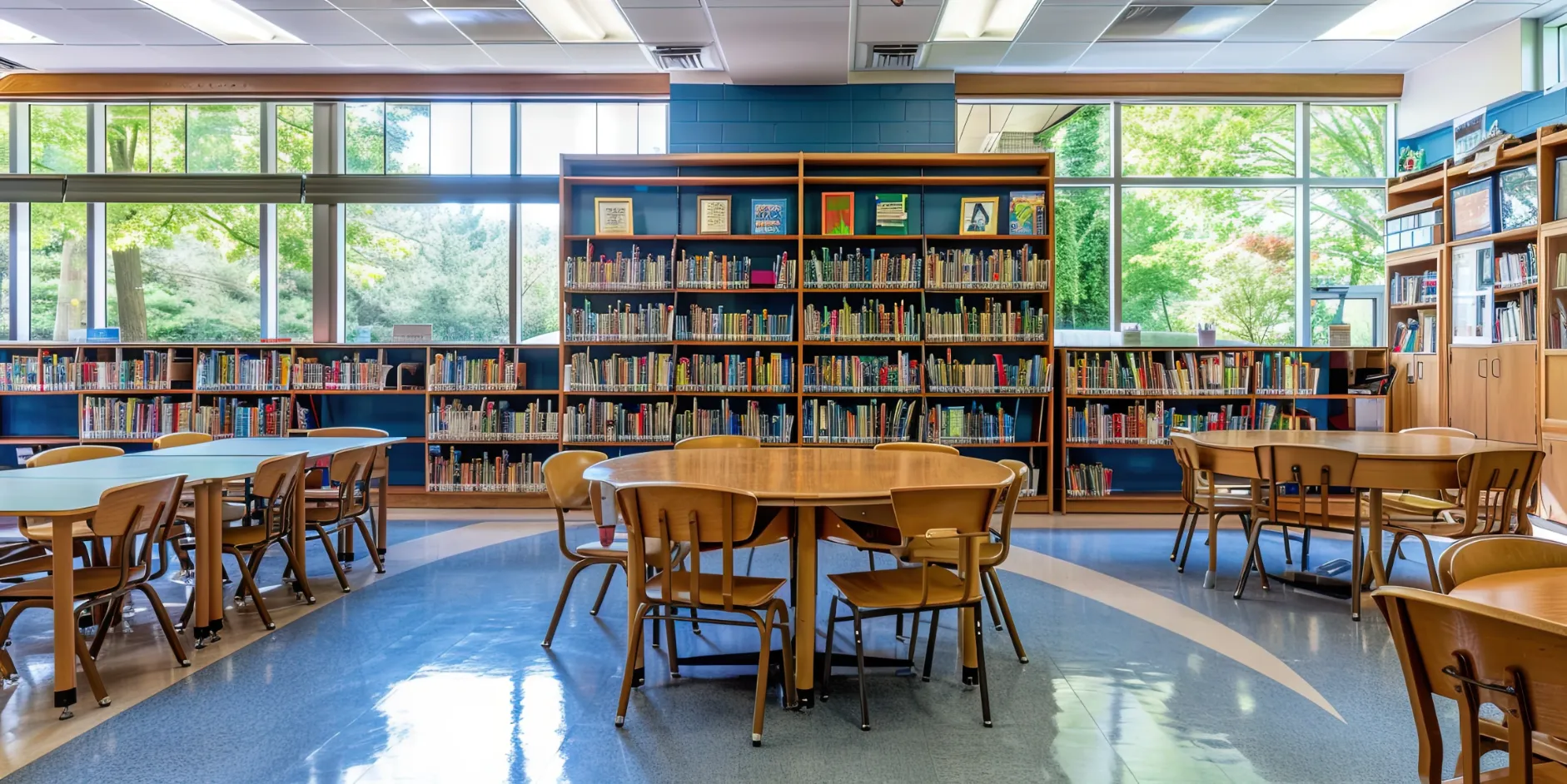
For libraries, carpet tile or broadloom carpet is almost always the best choice for sound absorption and underfoot comfort. Other materials create a noisy environment that isn’t conducive to reading and studying.
When Does Carpet Tile Make More Sense Than LVT in a Classroom?
LVT and carpet tile are comparable in terms of cost, durability, and maintenance. LVT for schools can be slightly more expensive upfront, but also lasts a bit longer. The primary deciding factor for classroom flooring is acoustic performance.
In lower grades where classroom management can be more difficult, the sound-dampening of carpet tile is invaluable. Plus, solution-dyed nylon means spills don’t set in at the fiber level. Since you can spot-replace individual tiles, the long-term costs of carpet remain predictable.
What Flooring Works Best in School Hallways, Cafeterias, and High-Traffic Common Areas?
Here’s an overview of the best flooring solutions for high-traffic areas:
- Hallways: LVT or rubber are usually the best options for school hallway flooring. Both materials can handle constant foot traffic, are easy to clean, and hold up under rolling loads. With VCT flooring, schools have a viable, budget-friendly option, but it requires consistent maintenance, which can make it more expensive in the long term.
- Cafeterias: Homogeneous sheet vinyl with heat-welded seams is the industry standard for cafeteria flooring for schools. Flooring contractors use heat guns to “weld” the seams of each tile together. As a result, these floors have no seams, no grout lines, and nowhere for moisture to penetrate. Plus, a flash cove base integrates wall-to-floor for a fully sealed surface that’s easy to keep clean and sanitary.
To assess the sound-dampening capabilities of a carpet tile, look for its impact insulation class (IIC) rating. This number, ranging from 25 to 85 or more, indicates how well a floor attenuates impact noise (such as footsteps). A higher IIC translates to better sound absorption.
Is VCT Still a Smart Choice for Schools on a Tight Budget?
VCT has a lower purchase price, and the regular maintenance routine is a familiar one that many facilities crews already run. However, the strip-and-wax cycle adds up, both in terms of labor and cost.
Whether VCT is a viable option for your facility depends on your existing maintenance staff situation. If you don’t have a regular maintenance crew in place that can handle upkeep, hiring contractors to strip and wax your floors once or twice a year can put a strain on your budget long-term.
On the other hand, if your maintenance staff is equipped to handle strip-and-wax procedures with ease, VCT can be a good way to save on installation costs.
What Are the Right Flooring Solutions for Gyms, Labs, and Specialty School Spaces?
Let’s take a look at some of the more specific areas of school facilities:
- Gyms and weight rooms: Rubber flooring in schools is often the best choice, as it has slip resistance and cushioned underfoot comfort. Rubber can also handle rolling loads without denting, and holds up in wet environments like locker rooms. Flooring specialists can also inlay game lines into gym flooring for schools.
- Science and STEM labs: Welded sheet goods or homogeneous sheet vinyl school floors are ideal for science lab flooring for their chemical resistance, moisture resistance, and minimal seams.
- Performing arts/dance: Sprung floors or Harlequin-style dance flooring is a good choice for dance spaces where appropriate.
- Entryways: Walk-off carpet or entrance grids (Pedimat-style) can help protect interior floors from tracked moisture and debris. Multipurpose rooms that shift between athletics, dining, and assemblies raise many of the same point-load and acoustic questions as flooring for multi-use and community spaces.
How Do You Balance Sustainability Goals With School Flooring Budgets?
For most schools, the tension in choosing K-12 education flooring lies between durability, functionality, and budget. Cradle to Cradle certified products and LEED flooring for schools are achievable goals even in facilities with a tight flooring budget. The key is to find a knowledgeable commercial flooring dealer.
The experienced professionals at Consolidated Flooring will be able to advise you on which products qualify and how to sequence the project. We’re a family-owned commercial flooring dealer with over 80 years of experience.
Consolidated Flooring also has a robust range of school flooring sustainability programs. We recycle and work with reclaimed materials, as well as participating in the ReEntry program. Many of our carpet fibers use EcoSolution Q, a recyclable, sustainable, and durable option. We’re proud to help floor replacements meet LEED certification criteria as well.
In schools, where student health and safety are the top priorities, PVC-free and low-VOC options help improve indoor air quality. This is an especially important factor for classrooms full of developing kids.
The best way to identify the best flooring solution for your needs is a free consultation with one of our flooring experts. Contact Consolidated Flooring to schedule your no-obligation consultation.
Frequently Asked Questions
What is the best flooring for school classrooms?
LVT with a 5mm wear layer and carpet tile are the two best classroom options. LVT is low-maintenance and durable under rolling loads; carpet tile is preferred in lower grades because its sound dampening helps with classroom management, and solution-dyed nylon resists staining.
What flooring is best for school cafeterias?
Homogeneous sheet vinyl with heat-welded seams and a flash cove base is the industry standard. Welding the seams leaves no grout lines or gaps for moisture, creating a sealed, sanitary, easy-to-clean surface that stands up to spills and heavy traffic.
What is the best gym flooring for schools?
Rubber flooring is usually the best choice for gyms and weight rooms. It provides slip resistance, cushioned comfort, and resistance to rolling loads and moisture, and game lines can be inlaid directly into the floor.
What flooring is best for school science labs?
Welded sheet goods or homogeneous sheet vinyl are ideal for STEM and science labs because they resist chemicals and moisture and have minimal seams, which keeps spills from penetrating the surface.
Is VCT still a good flooring choice for schools?
VCT has the lowest upfront cost but requires periodic stripping and waxing. It makes sense only if your facility has a maintenance crew that can handle the strip-and-wax cycle; otherwise the long-term labor cost can outweigh the savings.
How do you choose school flooring on a tight budget?
Compare life-cycle cost, not just upfront price, since low-cost materials often carry higher maintenance and replacement costs. Proper floor prep, leveling and moisture mitigation, protects the investment, and LEED or Cradle to Cradle products can be specified even on a tight budget.