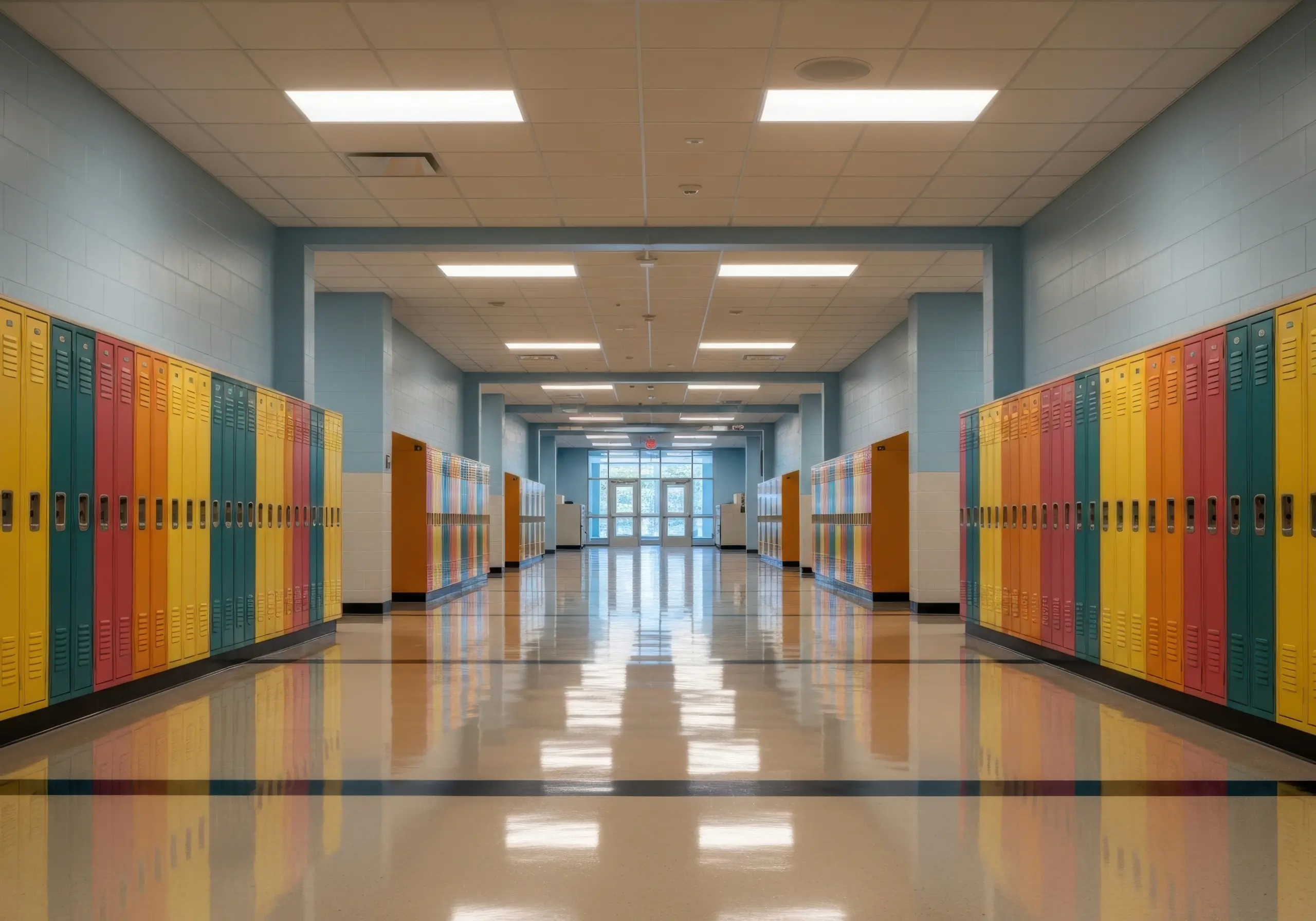
What Are The Most Durable Flooring Products for K-12 Institutions? A Guide To School Flooring
The most durable flooring options for schools are luxury vinyl tile (LVT), rubber flooring, and homogeneous sheet vinyl, each built to handle the daily punishment of hundreds of students, rolling loads, spills, and constant mopping. For hallways and classrooms, LVT leads on lifecycle cost and low maintenance. Rubber is the standard for gyms and locker rooms. Sheet vinyl with heat-welded seams is the go-to for cafeterias and labs where moisture is the main threat.
K-12 buildings are some of the most demanding commercial environments we work in. Choosing the wrong product doesn’t just cost money, it costs safety, air quality, and years of unnecessary headaches. That’s why school flooring decisions deserve serious attention upfront, and why our team at Consolidated Flooring always starts the conversation the same way: match the material to the space.
Why Is Choosing the Right School Flooring Materials So Important?
School facilities managers aren’t just picking a color or texture. They’re making a decision that affects student safety, maintenance budgets, and the long-term performance of the building. Get it right, and you’re looking at a floor that lasts 15-plus years with predictable maintenance costs. Get it wrong, and you’re replacing it in five.
How Does Flooring Affect Student and Staff Experience?
The impact goes well beyond durability. Acoustic flooring plays a real role in classroom performance. Softer surfaces like carpet tile absorb sound and reduce the background noise that makes it harder for students to focus and teachers to be heard. Slip resistance is equally non-negotiable; the right slip-resistant flooring protects students and staff in high-traffic zones and wet areas like restrooms and entryways.
Indoor air quality matters too, especially in spaces full of kids whose lungs are still developing. We always steer clients toward low-VOC products and, where possible, PVC-free options that meet LEED and Cradle to Cradle standards. Because a healthy floor is part of a healthy learning environment.
What Are the Most Durable School Flooring Materials for High-Traffic Areas?
When it comes to durable flooring for schools, no single product does everything. But if you’re asking what school floors are made of in the highest-performing K-12 facilities, the same materials come up consistently. Here are the best flooring options for schools ranked by where they deliver the most value:
- Luxury Vinyl Tile (LVT) is the best flooring for classrooms and hallways. It handles heavy foot traffic, requires minimal maintenance, and outperforms most education flooring options on lifecycle cost.
- Vinyl Composition Tile (VCT) remains a budget-friendly school flooring material with a familiar maintenance routine, though the long-term waxing program adds up over time.
- Rubber Flooring is the top choice for gyms, weight rooms, and locker rooms — slip-resistant, cushioned, and built for rolling loads.
- Homogeneous Sheet Vinyl is the go-to school flooring material for cafeterias and labs, with heat-welded seams that give moisture nowhere to go.
- Carpet Tile is underrated as flooring for schools. In classrooms, libraries, and admin offices it delivers acoustic control and easy spot replacement.
- Polished Concrete works well in utility and back-of-house areas where budget is tight and low maintenance is the priority.
The right material depends on foot traffic volume, cleaning routines, and the specific demands of each space. Here’s how the top options stack up in detail.
Is Luxury Vinyl Tile or Vinyl Composition Tile Better for School Hallways?
This is one of the most common questions we field, and the answer comes down to lifecycle cost vs. upfront budget. Vinyl composition tile (VCT flooring) has a lower purchase price and a familiar strip-and-wax maintenance routine that many facilities teams already know. But over time, that waxing program adds up.
Luxury vinyl tile (LVT) for classrooms and flooring for school hallways costs more upfront but requires significantly less daily maintenance. If you’re evaluating options, understanding what is LVT flooring can help clarify why it performs so well in educational environments. A 5mm wear layer LVT holds up better under rolling loads and heavy foot traffic than a 2.5mm LVT. TARR ratings (Texture Appearance Retention Ratings) are a reliable benchmark for comparing long-term durability between products. For schools managing tight maintenance staffing, low-maintenance school flooring like LVT usually wins the lifecycle cost calculation.
Are Carpet Tiles a Good Option for K-12 Schools?
A lot of facilities managers hesitate here, but carpet tile for schools is worth a second look when it’s specified correctly. Solution-dyed nylon fibers, like EcoSolution Q, resist staining at the fiber level, meaning spills don’t set in the way they do with lesser products. Damaged tiles can be spot-replaced without pulling up an entire room, which keeps maintenance costs predictable. For classrooms, libraries, and administrative offices, the acoustic benefits alone often make carpet tile for schools the right call.
Which Flooring Materials Work Best in Each Type of School Space?
Now that we’ve covered the main materials, let’s talk about where each one performs best, because a gym floor and a cafeteria floor have almost nothing in common.
What’s the Best Flooring for School Gyms, Weight Rooms, and Locker Rooms?
Gyms, weight rooms, and locker rooms are ideal rubber flooring school spaces. Rubber flooring is slip-resistant, cushioned underfoot, handles rolling loads without denting, and holds up to moisture in locker rooms and pool areas. Multi-use gym floors can be outfitted with painted game lines for basketball, volleyball, and pickleball without compromising the surface. For spaces where safety and performance are both on the line, rubber is the standard for good reason.
How Do You Handle Moisture Resistance in School Cafeterias and Labs?
Cafeterias and science labs demand a moisture-resistant floor that leaves no room for spills to sneak into the subfloor. Homogeneous sheet vinyl with heat-welded seams is the go-to solution: no grout lines, no seams, no place for liquid to penetrate. In older school buildings where subfloor challenges are common, our floor leveling team addresses any moisture mitigation needs before installation begins, so the finished floor performs the way it should from day one.
What Else Should Facilities Managers Consider When Choosing School Flooring?
Commercial flooring for K-12 projects has a sustainability side that matters more every year. Cradle to Cradle certified products, reclamation and recycling programs, and LEED flooring credits are all real options, and Consolidated Flooring‘s sustainability programs help schools hit those goals without sacrificing durability. For utility spaces and back-of-house areas, polished concrete is a cost-effective, low-maintenance option worth considering when the budget is tight.
How Does Consolidated Flooring Support K-12 Projects From Spec to Installation?
We’ve been in this business for over 80 years. Consolidated Flooring is a multi-generational, family-owned commercial flooring dealer with skilled installation mechanics serving K-12 institutions across NYC, Chicago, Indianapolis, Fort Lauderdale, and San Antonio. Our team handles every step: specification and planning, product selection, floor leveling, school flooring installation, and ongoing maintenance. So, you’re never coordinating between multiple vendors on a tight summer timeline.
If you’re planning a school renovation flooring project or specifying K-12 flooring for a new build, reach out to our team for a consultation. We’ll help you match the right product to every space in the building, and back it up with the experience to get it done right.