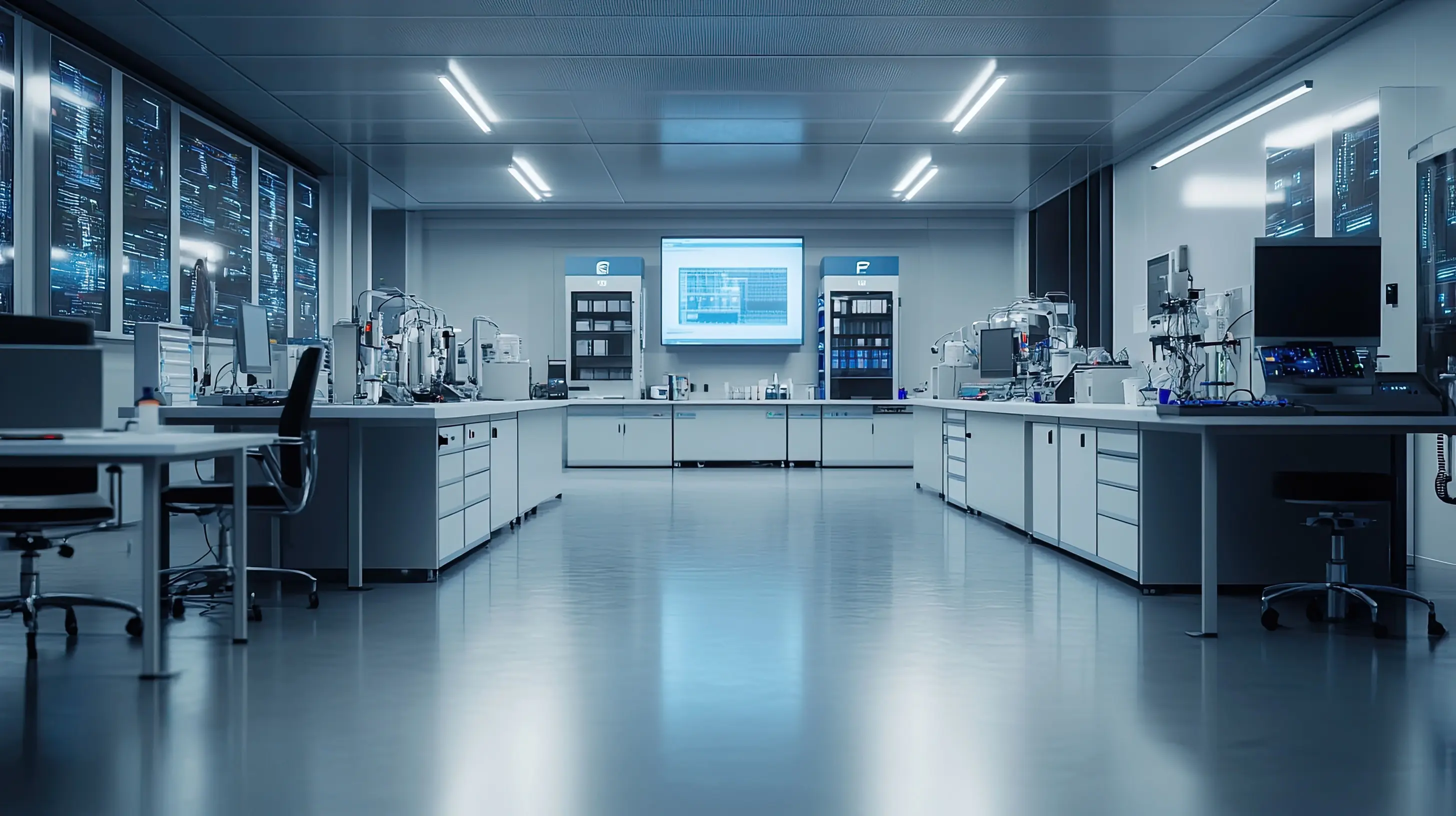
What Are the Requirements for Laboratory Flooring?
Laboratory flooring is one of those specs that looks simple on paper until you’re standing in a failed healthcare lab six months post-installation, watching a floor buckle under daily disinfectant cycles. As a commercial flooring dealer with 80+ years of specialized commercial experience, we’ve seen what happens when labs get floored like standard office spaces, and it isn’t pretty. Let’s break down what makes lab-grade flooring different, what materials actually belong in these environments, and how to get the spec right before you break ground.
What Makes Laboratory Flooring Different From Standard Commercial Flooring?
Standard commercial flooring is built for foot traffic, light maintenance, and reasonable aesthetics. Laboratory environments swing much harder: chemical spills, biological agents, heavy equipment loads, static electricity, and industrial-strength disinfectant cycles, sometimes all in the same room. Controlled environments demand controlled surfaces, and that requires a completely different design conversation.
What Are the Real Risks of Using the Wrong Flooring in a Lab?
The consequences aren’t hypothetical. Flooring without adequate chemical resistance degrades at seams and surfaces, creating crevices where contaminants accumulate. Surfaces that don’t meet slip resistance thresholds become hazards the moment a spill occurs. Skip moisture mitigation during subfloor preparation for commercial work, and you’re looking at adhesive failure, bubbling, and mold beneath a floor that looks fine on top. These mistakes cost far more to fix than they do to prevent.
What Are the Core Requirements for Laboratory Flooring?
Across nearly all lab types, a handful of non-negotiables show up on every spec sheet.
Chemical-resistant flooring is the baseline. Lab flooring must withstand acids, solvents, disinfectants, and hazardous materials without degrading. ASTM F925 is the recognized testing standard for chemical resistance, and it’s worth knowing before you specify any material.
Slip-resistant commercial flooring is non-negotiable in wet laboratory areas. The anti-slip properties need to be built into the material itself. Epoxy, for instance, can be dangerously slick without added aggregate or texture.
Seamless sheet flooring with non-porous surfaces is the gold standard for contamination control flooring. No grout lines, no cracks, no hiding spots for bacteria. Seamless installations are typically turned up the wall as flash cove base, eliminating the floor-to-wall joint entirely.
ESD flooring and static dissipative flooring are required wherever the buildup of static electricity near sensitive equipment creates a safety or compliance risk. This is especially true in environments such as pharmaceutical manufacturing, semiconductor production, and certain biotech facilities.
Load capacity rounds out the core list. Labs running heavy machinery need flooring that meets the static load requirements under ASTM F970 before anything else gets specified.
Do All Laboratory Areas Have the Same Flooring Requirements?
Not even close. Healthcare lab flooring prioritizes infection control and seamless installation. Pharmaceutical lab flooring and cleanroom flooring demand ESD compliance and alignment with FDA, ISO 14644, and GMP frameworks. Education labs lean toward cost-effective durability; research environments often balance ergonomics alongside chemical resistance. The right answer always starts with a detailed site assessment, not a product catalog.
What Are the Best Flooring Materials for a Laboratory?
The appropriate flooring materials come down to what the space actually demands.
Epoxy flooring laboratory work delivers the highest chemical resistance and hygiene with a fully seamless, non-porous surface. It’s ideal for heavy-duty industrial and research labs. Longer cure times make epoxy resin better suited to planned build-outs than active occupied spaces.
Resilient sheet flooring (homogeneous vinyl) with heat-welded seams is a clinical workhorse. It’s low maintenance, easy to disinfect, and highly durable under frequent cleaning cycles in healthcare and clinical settings.
Rubber flooring in biotech environments is particularly beneficial due to rubber’s excellent slip resistance, sound-absorbent qualities, and resistance to chlorinated solvents.
Static control flooring in ESD-rated vinyl or rubber protects sensitive equipment and pharmaceutical processes from damaging static discharge.
VCT remains a cost-effective, reliable choice for education and lower-risk laboratory areas. Sealed concrete and resin floors offer solid chemical resistance and durability at lower upfront costs than full epoxy systems. Linoleum brings natural anti-microbial properties and strong credentials that help labs with serious environmental-impact priorities meet their sustainability goals. Porcelain and ceramic tile round out the flooring options for high-visibility lab zones where aesthetics and performance intersect.
How Do Upfront Costs Compare to Long-Term Benefits for Lab Flooring?
Higher-performance flooring materials like epoxy and resin floors carry real upfront costs, and they earn them back over time. Extended replacement cycles, reduced repairs, and easier routine maintenance make these materials genuinely cost-effective on a lifecycle basis. Cost considerations should always weigh initial spend against long-term durability. Cost-effective options like VCT and sealed concrete absolutely make sense in lower-risk zones where chemical exposure is minimal.
How Do You Choose the Right Flooring for Your Laboratory?
Before you pick a material, map the space. What chemicals and hazardous materials are present? What equipment loads will the floor carry? What regulatory standards apply (FDA, ISO 14644, GMP, ANSI/ESD S20.20)? What do your cleaning protocols look like, and how hard will they hit surface longevity under constant foot traffic?
The right flooring solutions start with those answers, not a product recommendation.
What Does Proper Maintenance Look Like for Lab Flooring?
Proper maintenance keeps lab flooring performing long after the job is done. That means routine maintenance schedules, cleaning products that won’t chemically degrade surfaces, and regular inspection for wear under heavy use. Rubber and linoleum are genuinely low-maintenance; sealed concrete needs periodic resealing to stay effective. We offer post-installation maintenance services to keep laboratory operations running without interruption.
When Should You Work With a Commercial Flooring Dealer?
Lab flooring involves overlapping technical variables that are genuinely hard to navigate without specialized experience. A dealer handles specification, procurement, subfloor preparation for commercial work, skilled installation by experienced mechanics, compliance documentation, and long-term maintenance. All under one roof.
We’ve done it for demanding clients like Mount Sinai Morningside, Newark Beth Israel, Children’s Hospital, and Westchester Medical Center. We know how to move quickly to minimize lab downtime, and we know how to get the spec right the first time.
If you’re planning a lab project, let’s start with a conversation. Contact Consolidated Flooring to talk through your space and get the right flooring solutions dialed in from day one.