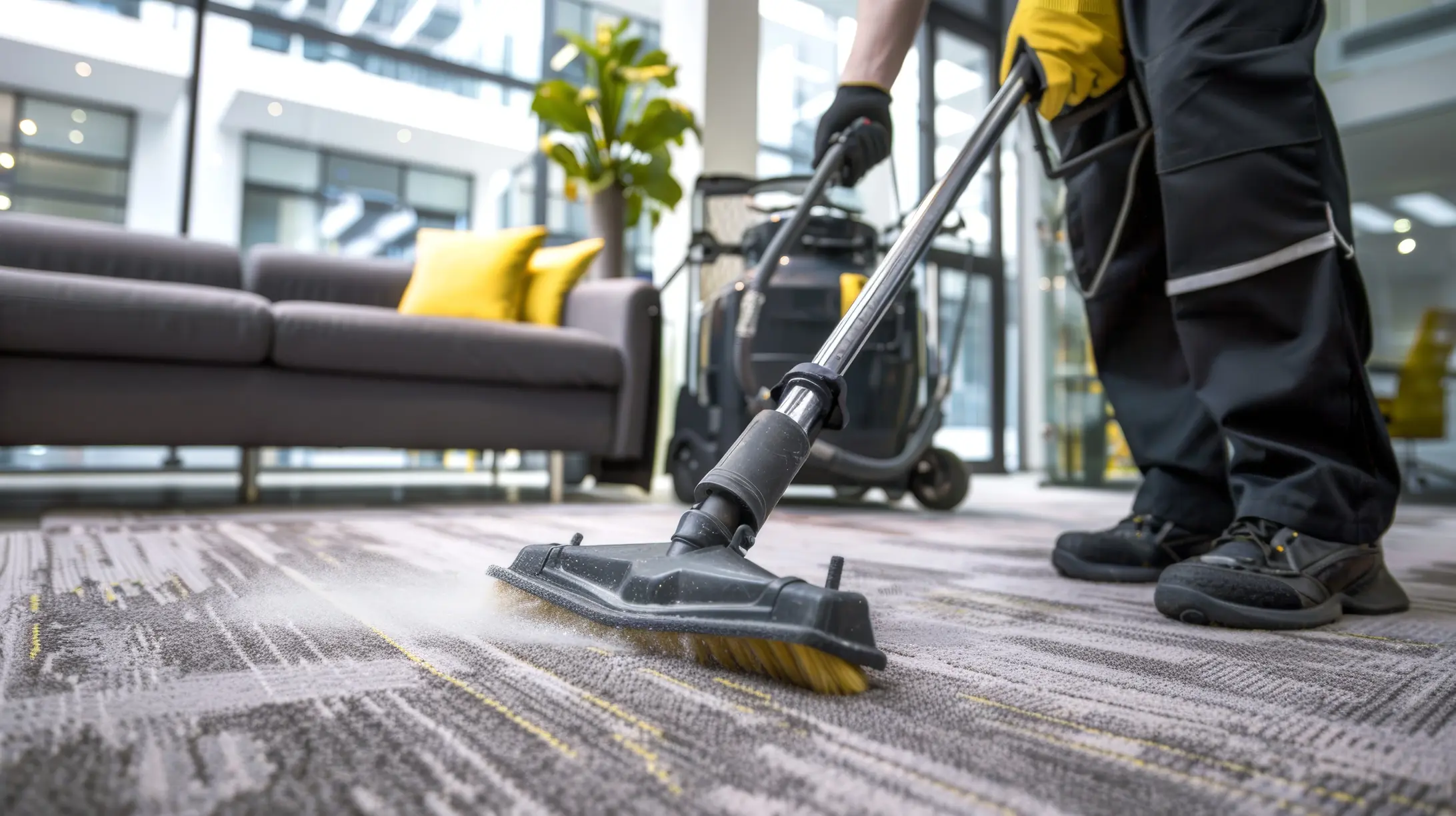
How To Clean and Maintain Commercial Carpet
If you manage a commercial property, carpet is probably your most visible surface, not to mention the most punished. Lobbies, corridors, freight elevators, tenant spaces: commercial carpeting takes a beating every single day, and a solid commercial carpet maintenance plan is what separates floors that last a decade from floors that look exhausted by year three. We’ve been in commercial flooring for over 80 years, and we can tell you that the buildings with the best-looking carpet aren’t buying better carpet. They’re maintaining it smarter. Let’s get into it.
How Do You Build a Commercial Carpet Maintenance Schedule?
A good carpet maintenance schedule isn’t complicated, but it does require four distinct tiers working together.
What’s the Difference Between Daily Vacuuming, Interim Cleaning, and Deep Cleaning?
Think of it as a pyramid. At the base is prevention: walk-off mats and entrance mats at every entry point intercept tracked-in soil and moisture before it reaches your carpet. Above that is daily vacuuming of high-traffic areas like lobbies, corridor flooring, and elevator cabs, which keeps dry soil from grinding down fiber. Then there’s interim low-moisture cleaning, like encapsulation carpet cleaning, which your janitorial team or a contracted crew handles between deeper cycles. At the top is restorative carpet cleaning using hot water extraction, which pulls out deeply embedded soil that routine flooring maintenance can’t touch. Your in-house team typically owns the first two tiers. The latter two should be scheduled with professionals.
If tenants or building ownership are open to exploring alternatives during a replacement cycle, it’s worth understanding how carpet stacks up against other options our guide on carpet vs. laminate flooring covers the key differences to help you make the right call for each space.
How Often Does Office Carpet Need To Be Deep Cleaned?
For high-traffic areas like lobbies, corridor flooring, and freight elevators, quarterly deep cleaning is a reasonable baseline. Office carpeting in moderate traffic zones holds up well with one to two professional cleanings per year. What property managers often miss: most carpet manufacturer warranties require professional carpet cleaning at specified intervals, and skipping those cleanings can void coverage. That’s a compliance issue worth flagging in your maintenance calendar before it costs you.
What Commercial Carpet Cleaning Methods Actually Work?
Now that your schedule is set, the right cleaning methods matter just as much as frequency.
Hot Water Extraction vs. Dry Carpet Cleaning: Which Is Right for Your Space?
Hot water extraction, also called steam cleaning, is the most thorough option available. It flushes deeply embedded soil and allergens that interim methods leave behind. The tradeoff is drying time, so it’s best scheduled after hours or over a weekend. Dry carpet cleaning methods like encapsulation and bonnet cleaning use low moisture and let you return to operation quickly, making them the right call for interim maintenance between restorative cycles. One thing worth understanding: bonnet cleaning is surface-level only. It’s not a substitute for periodic deep cleaning; it buys you time between the sessions that actually matter.
How Do Carpet Fibers Affect Which Cleaning Method You Should Use?
Not all carpet fibers respond the same way to moisture and chemistry. Solution-dyed nylon, Colorstrand, Econyl, and trilobal fiber each have specific tolerances, and using the wrong carpet cleaning solution can cause residue buildup, fading, or accelerated re-soiling. The principle is straightforward: follow manufacturer recommendations, stay aligned with CRI standards, and always test cleaning solutions in a discreet area before going full coverage.
How Do You Handle Spills and Spot Cleaning in a Commercial Building?
Why Acting Fast on Spills Matters More Than the Cleaning Solution You Use
There’s a real difference between a spot and a stain. One is a fresh spill, the other is what happens when you wait. Spot cleaning within minutes of a spill is almost always more effective than whatever product you reach for. Blot, don’t scrub. Match your solution pH to the soil type. Acting fast is the single biggest thing that protects your carpet’s appearance and extends service life, regardless of what commercial carpet care products you keep on hand. Stain removal gets exponentially harder after soil sets in.
Which Areas of a Commercial Property Need the Most Carpet Care?
Entrance and lobby areas are ground zero for soil accumulation, but walk-off mats and entrance mats positioned at every entry can intercept up to 80% of tracked-in debris before it reaches your carpet, a figure the Carpet and Rug Institute has long cited as the standard for effective entryway protection. Corridor flooring, elevator cabs, freight areas, and back-of-house zones deserve scheduled attention on their own, since these spaces see heavy foot traffic with less visibility, which means problems compound quietly. Regular vacuuming and professional office carpet cleaning in these areas also contribute directly to indoor air quality by removing allergens and debris that accumulate in commercial spaces over time.
When Should You Replace Commercial Carpet Instead of Cleaning It?
What Signs Tell You Cleaning Isn’t Enough Anymore?
Matting that doesn’t respond to pile lifting, permanent staining, worn or broken carpet fibers, and a declining TARR rating are all signals that commercial carpet cleaning has hit its ceiling. Subfloor moisture issues can accelerate that timeline fast. The financial case for acting early is real: waiting until the carpet is completely degraded costs more than a planned replacement on your schedule. The experts at Consolidated Flooring can help you confidently make decisions about carpet replacement, as we have over 80 years of experience in the business. Consolidated Flooring is where commercial carpet cleaning services and commercial flooring dealer services meet. When cleaning isn’t enough, we assess, specify, and replace without requiring a separate designer or GC. Reach out to us when you’d like a professional set of eyes on your floors.