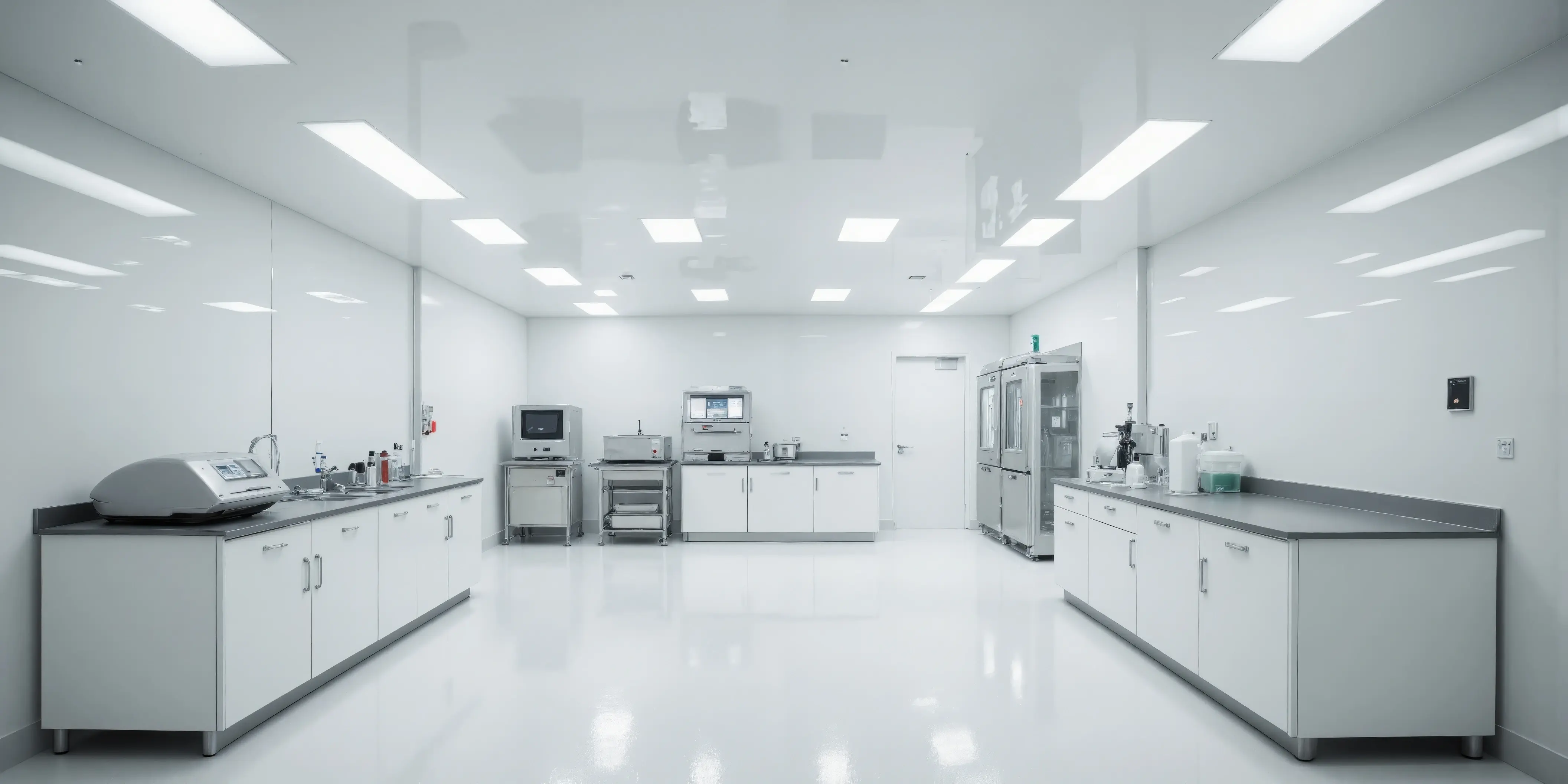
What Is the Best Flooring for a Cleanroom? A Guide to Cleanroom Flooring Types
Unlike retail and corporate spaces, cleanrooms have strict standards when it comes to flooring. Choosing the wrong cleanroom flooring material can lead to compliance issues, as well as increasing the risk of contamination.
The flooring material you choose can also affect how easy it is to sanitize your clean room. In this guide, we’ll give you an overview of the best flooring for cleanrooms and how to choose the right one for your facility.
What Makes Cleanroom Flooring Different From Regular Commercial Flooring?
Commercial flooring in retail spaces and even manufacturing facilities doesn’t have to meet the same standards as cleanroom flooring. Using seamless flooring, clean rooms are non-porous and resistant to chemicals and solvents. Many clean rooms also use ESD flooring, which dissipates static buildup.
Why Can’t Concrete or Standard Flooring Be Used in a Controlled Environment?
Concrete has a porous surface, which means contaminants can accumulate in tiny holes or cracks in the surface. Concrete also produces particulates and dust, which are contaminants themselves. Flooring options such as carpet and vinyl have seams or permeable surfaces, which are also unsuitable for cleanrooms.
What Are the Main Types of Cleanroom Flooring?
Here’s a quick look at the most common cleanroom flooring materials:
Epoxy Cleanroom Flooring
Epoxy is one of the most common cleanroom flooring types. The application involves pouring a liquid epoxy, which produces a seamless surface with superior chemical resistance and durability to withstand high foot traffic.
Key Benefits:
- Fully seamless surface eliminates particle traps and bacteria harborage points
- Superior chemical resistance handles aggressive disinfectants and solvents without degrading
- High compressive strength supports heavy rolling loads and equipment without cracking
- Available with ESD properties for facilities managing electrostatic discharge risk
- Long service life with minimal maintenance when properly installed and sealed
Heat-Welded Vinyl Sheet
Heat-welded vinyl flooring is a popular choice for pharmaceutical cleanrooms. It has a non-porous
flooring surface and is easy to clean. Like regular vinyl flooring, it goes on in rolled sheets, but the technicians use heat guns to “weld” the seams together for cleanroom applications like lab flooring and healthcare cleanrooms.
Key Benefits:
- Heat-welded seams create a continuous monolithic surface that meets ISO contamination control standards
- Non-porous surface resists moisture, bacteria, and chemical penetration
- Softer underfoot than epoxy, reducing staff fatigue in high-standing-time environments
- Wide range of colors and finishes supports cleanroom zoning and wayfinding
- Easier and faster to replace in sections compared to poured flooring systems
ESD/Static Dissipative Flooring
ESD flooring for cleanrooms isn’t a specific material. Rather, it’s any ISO cleanroom flooring with the property of being able to dissipate static charges. Both vinyl and epoxy can also be ESD flooring. Dissipative flooring is a common choice for facilities that manufacture sensitive electronics.
Key Benefits:
- Safely channels electrostatic discharge away from personnel and sensitive equipment
- Protects electronic components and semiconductor devices from ESD-related damage
- Available in both vinyl and epoxy formats to suit different ISO classification requirements
- Meets ANSI/ESD S20.20 and IEC 61340 standards for controlled environment applications
- Combines contamination control and static management in a single flooring system
Urethane Flooring Systems
Urethane, like epoxy, gets poured as a liquid. It’s ideal for environments where chemical exposure is a risk. Its scratch resistance and thermal resistance also make it a good choice for facilities with heavy equipment or high temperatures.
Key Benefits:
- Outstanding thermal resistance handles temperature cycling and hot equipment without cracking or delaminating
- Superior scratch and abrasion resistance extends service life in high-traffic and heavy-equipment zones
- Flexible composition absorbs impact better than epoxy, reducing cracking under dynamic loads
- Excellent chemical resistance against acids, bases, and industrial solvents
- Seamless installation meets controlled environment flooring requirements for contamination control
VCT — Vinyl Composition Tile
VCT is a budget-friendly option for facilities where compliance requirements aren’t as strict. ISO-8 spaces, for example, often use VCT cleanroom flooring. Since it has small seams, it isn’t suitable for more stringent cleanroom applications.
Key Benefits:
- Lower upfront material and installation cost makes it viable for ISO 7 to 9 support and utility areas
- Individual tiles allow for targeted spot replacement without full floor removal
- Durable and proven in moderate-traffic controlled environment support zones
- Wide product availability across multiple manufacturers and colorways
- Compatible with standard cleanroom-approved cleaning agents and maintenance schedules
Rubber Sheet Flooring
Rubber sheet flooring is commonly used in support areas of labs and pharmaceutical facilities. It has a non-slip surface with excellent traction while also holding up to wear and tear from daily use.
Key Benefits:
- Natural slip resistance meets ADA and OSHA wet-condition safety requirements without additional treatment
- Sound-dampening properties reduce impact noise in lab corridors and support areas
- Excellent underfoot comfort reduces staff fatigue during extended standing shifts
- Strong resistance to abrasion and daily wear in high-foot-traffic support zones
- Available in static dissipative formulations for dual contamination and ESD control
What About Raised Flooring — When Does It Make Sense in a Cleanroom?
Raised flooring materials use panels supported above a subfloor structure for airflow or housing ducts, wires, etc. However, the extra airflow can also help with contamination control. Flooring with raised panels can direct contaminants away from the panels for easy sanitizing. This is an ideal choice for tech manufacturing facilities that require semiconductor cleanroom flooring. However, raised flooring systems are more expensive to install than other options.
Key Benefits:
- Improves airflow management and contamination control by directing particles away from the floor surface
- Conceals electrical, mechanical, and HVAC infrastructure beneath panels for a clean unobstructed environment
- Allows rapid access to underfloor systems for maintenance without major disruption to cleanroom operations
- Ideal for semiconductor and electronics manufacturing facilities with complex infrastructure requirements
- Modular panel design allows reconfiguration as facility layout needs evolve over time
How Do You Choose the Right Cleanroom Flooring for Your Facility?
When choosing cleanroom-appropriate commercial flooring in, New York City, Carlstadt (NJ), Chicago, Detroit, Indianapolis, Fort Lauderdale, and San Antonio facility managers have several options to choose from.
Here are a few considerations to keep in mind when choosing cleanroom flooring:
Does ISO Classification Affect Which Flooring Material You Should Use?
Yes, some cleanroom flooring solutions are only appropriate for certain ISO classifications. Less rigid classifications like ISO 7-9 can get away with budget options like VCT. However, more strict ISO classifications demand sanitary options like epoxy with coved bases.
Which Cleanroom Flooring Works Best for Pharmaceutical and Biotech Facilities?
Pharmaceutical cleanroom flooring and biotech flooring need to be able to withstand chemical exposure and frequent cleaning, as well as heavy foot traffic, all while remaining sanitary. To meet standards set by the FDA and GMP, flooring for pharmaceutical facilities can’t be just any seamless material. Rubber sheet flooring and epoxy are among the most popular choices for the specific needs of pharmaceutical facilities, and both are FDA-compliant flooring options.
What Does Professional Cleanroom Flooring Installation Actually Involve?
Cleanroom flooring installation requires specialized expertise that goes beyond that of general commercial flooring contractors.
With an experienced commercial flooring dealer like Consolidated Flooring, the process involves:
- Subfloor preparation: Leveling, cleaning, and replacing the existing subfloor if necessary
- Moisture mitigation: Applying moisture barriers for improved adhesion
- Heat-welded seams: For materials like vinyl sheet that have seams, using heat guns to bind the seams into one continuous surface
- Coved base flooring: Flooring that covers the line where the floor meets the wall to create a rounded surface
- Safety standards: Meeting requirements like non-slip surfaces and chemical resistance
- Compliance documentation: Paperwork verifying that the floor meets regulatory requirements
- Minimizing downtime: Working overnight and during off-hours to minimize disruption to your daily operations.
Ready to Spec Cleanroom Flooring for Your Facility?
Consolidated Flooring is the premier commercial flooring dealer for cleanroom flooring systems. We have decades of experience installing floors that meet ISO classification standards. Schedule a free consultation to find out which flooring material is the best choice for your facility.