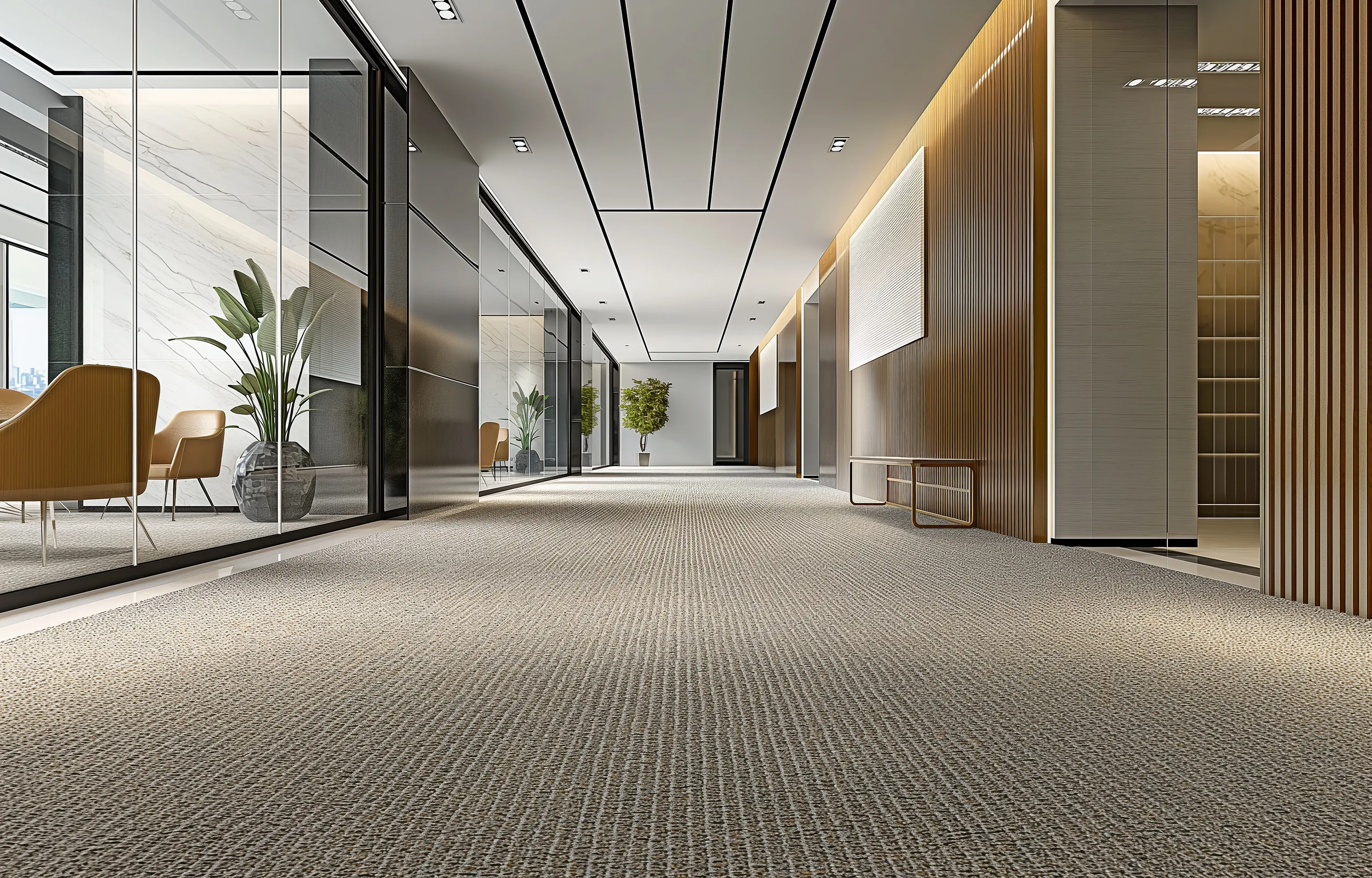
What Type of Carpet Is Best for an Office?
If you’re a property manager staring down a tenant renewal with no designer, no GC, and a fixed budget, you need a straight answer on carpet, not a two-hour sales pitch. Commercial flooring in office buildings endures daily wear, so choosing the right carpet matters. We’ve been helping businesses make these calls for over 80 years, and it usually comes down to four things: fiber, construction, format, and zone. Let’s break it down.
Does the Type of Office Carpet Actually Matter?
It does, and the difference shows up fast. The wrong carpet for the application looks tired within a year, generates maintenance calls, and costs more to replace than it saved upfront.
What Is Office Carpet Called?
Commercial carpeting comes in two primary formats: carpet tile (carpet squares) and broadloom (rolled goods). When a rep talks about “commercial-grade carpet,” they are referring to a product built with higher TARR (Texture Appearance Retention Ratings), denser construction, and fibers engineered for the daily grind of an office building.
What Is the Best Flooring for an Office?
Office carpet wins for most commercial interiors because it does things hard surfaces can’t: absorbs sound, adds comfort underfoot, and handles subfloor imperfections that would telegraph through LVT or polished concrete. Hard surfaces have their place, but for occupied offices where acoustic benefits and practicality matter, carpet is almost always the right call.
How Does Foot Traffic Affect Which Carpet You Should Choose?
High traffic areas like corridors, elevator lobbies, and collaborative zones need tight, dense, low pile commercial carpet that resists matting and cleans fast. Conference rooms and private offices can support more texture and design options. The key is matching the spec to the zone, not running one product across the entire floor plate.
What Are the Best Carpet Fiber Types for Commercial Offices?
Fiber is where a lot of property managers get tripped up and reps can steer you wrong. Here’s how the options stack up.
Why Is Solution-Dyed Nylon the Go-to for High-Traffic Office Areas?
Solution-dyed nylon is the workhorse of commercial carpet fiber and our go-to recommendation for most office applications. Color is locked into the fiber during manufacturing, not applied after. As a result, it won’t fade under UV, won’t bleed when wet, and resists stains at a molecular level. Nylon carpet consistently earns strong TARR scores, which measure how well a carpet holds its appearance under traffic. For corridors and open offices, solution–dyed nylon is the right spec.
Dye-injected fiber sits a step below. Color-injected post-extrusion makes it more vulnerable to fading over time. Not a bad fiber, but not what we’d put in a space where the tenant expects it to look sharp at year three.
When Does Wool Make Sense for a Commercial Space?
Wool earns its place in executive suites and prestige lobbies where aesthetics and sustainability are driving the spec. It’s naturally soil-resistant and carries strong environmental credentials, which is relevant if your tenant is pursuing LEED certification. The tradeoff is cost and care. Olefin and polyester fill out the lower end: olefin is moisture-resistant and budget-friendly for back-of-house; polyester offers rich color but compresses faster under real foot traffic.
Carpet Tile or Broadloom: Which Is Right for Your Office?
It depends on the space and how the office building operates day-to-day. Both carpet tiles and broadloom fall under commercial carpeting, but they solve different problems. Tiles prioritize flexibility and maintenance, while broadloom delivers a seamless look in larger areas. Choosing between them usually comes down to foot traffic, maintenance expectations, and how easily you want to handle carpet tile replacement over time.
What Makes Carpet Tile the Smart Choice for Occupied Office Replacement?
Carpet tiles are the answer for occupied office carpet replacement because our tradespeople can work section by section. This means they can replace individual tiles without a full demo, keeping the tenant operational throughout the project. For LIFT project flooring on a live floor, carpet tile is almost always the right spec. You can also rotate tiles to even wear patterns and reorder exact dye lots years later if something needs replacing.
Broadloom still wins for large open-plan areas where seam lines would show, and a seamless look matters. But for most tenant renewal work, carpet tile takes it.
What Carpet Construction Works Best in Different Office Zones?
Corridors and shared spaces demand durable carpet built for heavy foot traffic. In these high-traffic areas, property managers typically spec low pile commercial carpet with dense construction and strong commercial carpet durability ratings. These carpets resist matting, handle stains and spills like coffee more easily, and hold their appearance longer under constant daily use.
What Type of Carpet Holds up Best in Corridors and Common Areas?
Loop pile carpet (level loop specifically) is the standard for high-traffic areas. Uncut loops hold their shape under compression, resist matting, and clean easily. Commercial carpet durability in loop construction is well-proven.
Cut pile works well in private offices and executive spaces where traffic is lighter and comfort matters more. For multi-story buildings where impact noise is a tenant issue, look at products with a strong IIC rating performance. This is worth discussing when you’re planning a floor-by-floor replacement program.
Back-of-house zones such as dock areas, freight elevators, and security offices need a different spec entirely. Those spaces see rolling loads and moisture that standard office carpet isn’t designed to handle. We do those too, but that’s a separate conversation.
How Do You Actually Pick the Right Office Carpet Without Wasting Your Budget?
You don’t need a designer or a GC to execute a tenant carpet renewal. That’s exactly what Consolidation Flooring handles, soup to nuts: specification, right carpet selection, estimating, and skilled tradespeople who know the difference between a no-bid refresh and a full floor replacement program. Whether you’re working within a $7,500 threshold or managing a larger LIFT project, we’ll build a spec that fits the budget and holds up for the life of the lease.
We’re also one of the few commercial flooring dealers with a reclamation program. Through ReEntry and our landfill diversion initiatives, we remove and recycle old flooring responsibly, which matters to tenants with sustainability commitments.
Ready to spec the right carpet for your next tenant renewal? Talk to the team at Consolidated Flooring. We’ll take it from spec to installation without adding complexity to your project.